
Call us now :07971459289
 Send Inquiry
 Send Inquiry
Silicon Carbide Seals
MOQ : 50 Inches
Silicon Carbide Seals Specification
- Hardness
- HV 2200-2600
- Tolerance
- +/-0.01 Millimeter (mm)
- Product Type
- Silicon Carbide Seals
- Ash %
- < 0.2%
- Usage & Applications
- Ideal for mechanical seals in pumps, compressors, mixers, and other rotating equipment where superior chemical, wear, and corrosion resistance are required.
- Feature
- Excellent wear resistance, high hardness, corrosion resistance, and thermal stability
- Style
- Flat ring / Lapped surface
- Volatile Matter (%)
- < 0.5%
- Thermal Conductivity
- 80 - 120 W/mK
- Resistance level
- High chemical and thermal resistance
- Thickness
- 2-6 Millimeter (mm)
- Surface Finish
- Fine lapped, Ra 0.02 m
- Natural Rubber
- Yes
- Components
- Silicon carbide ring, optional composite with secondary materials for improved properties
- Length
- As per product design / requirement
- Part Type
- Seal ring / Seal face
- Water Absorption
- < 0.02%
- Color
- Grey
- Density
- 3.15 Gram per cubic centimeter(g/cm3)
- Size
- Standard and customized sizes available
- Material
- Silicon carbide (SiC)
- Width
- Customizable as per requirement
- Nitrogen Content (%)
- 0%
- Weight
- Varies by size and geometry
- Flame Resistance Level
- Non-flammable
- Tensile Strength
- Up to 600 MPa
- Temperature Resistance
- -30C to +400C
- Diameter
- 10 mm - 300 mm (custom sizes available)
- Shape
- Round / customized
- Edge Type
- Chamfered or sharp edges available
- Service Life
- Long service life under harsh operating conditions
- Pressure Resistance
- Up to 10 MPa
- Compatibility
- Compatible with carbon, tungsten carbide, and ceramic mating faces
- Porosity
- Zero / Non-porous
- Electrical Conductivity
- Semi-conductive
- Application Media
- Suitable with acids, alkalis, water, oil, gases
- Manufacturing Process
- Sintered or reaction bonded
- Flexural Strength
- 350 - 600 MPa
Silicon Carbide Seals Trade Information
- Minimum Order Quantity
- 50 Inches
- Supply Ability
- 100 Inches Per Day
- Delivery Time
- 7 Days
About Silicon Carbide Seals
We are identified as one of the leading organizations, engaged in manufacturing and supplying Silicon Carbide Seals. These seals are developed to withstand high temperature, high pressure & highly corrosive chemical attack. The seals are mainly used in fertilizers, nuclear plants, petroleum products, high pressure pumps and refineries. The compact designing of these seals allow easy installation and maintenance. Silicon Carbide Seals have corrosion and water resistant capabilities which tends to enhance its overall working life span. They prevent leakage and contamination of environment. These are highly durable and have high strength to work under extreme temperature and pressure conditions.
Superior Chemical and Wear Resistance
Silicon carbide seals are distinguished by their resistance to acids, alkalis, and corrosive substances. Their robust material structure provides outstanding protection against chemical attack and surface wear, even under continuous exposure to aggressive fluids and demanding cycles. This makes them ideal for industrial processes that require long-term sealing reliability.
Customizable Design and Precise Engineering
Available in a variety of standard and customizable sizes, our silicon carbide seals conform to rigorous tolerance standards of +/-0.01 mm. With options for round and tailored shapes, chamfered or sharp edges, and fine lapped surfaces (Ra 0.02 m), these seals can be adapted to your specific machinery and operational requirements for optimal effectiveness.
Reliable Performance in Harsh Environments
Silicon carbide seals operate efficiently across a wide thermal range (-30C to +400C) and withstand pressures up to 10 MPa. Their superior mechanical properties, such as high tensile strength and hardness (HV 2200-2600), guarantee durability where mechanical and fluid stresses are high. This translates to reduced maintenance needs and extended service life, even in critical applications.
FAQ's of Silicon Carbide Seals:
Q: How are silicon carbide seals manufactured for optimal durability?
A: Silicon carbide seals are produced using advanced sintered or reaction bonding methods, resulting in a dense, non-porous structure with excellent mechanical strength and wear resistance. This process ensures that the seals maintain their integrity under high stress and provide a fine lapped surface finish for superior sealing performance.Q: What advantages do silicon carbide seals provide for harsh chemical applications?
A: These seals offer exceptional chemical stability against acids, alkalis, oils, water, and gases. Their high corrosion resistance, combined with thermal stability and non-porous design, ensures reliable performance and minimal degradation, even during prolonged exposure to aggressive media.Q: When should I choose silicon carbide seals over other materials?
A: Silicon carbide seals are best chosen when your application demands high wear, chemical, and thermal resistance, such as in pumps or compressors handling corrosive fluids. Their compatibility with carbon, tungsten carbide, and ceramic mating faces further enhances sealing efficiency in these environments.Q: Where can silicon carbide seals be used most effectively?
A: These seals are ideal for use in mechanical seals in pumps, mixers, and compressors, particularly in chemical, petrochemical, water treatment, and industrial fluid handling systems, where superior sealing and resistance to harsh conditions are essential.Q: What is the process for customizing silicon carbide seal dimensions?
A: Simply specify your required diameters (10-300 mm), thicknesses (2-6 mm), widths, and desired edge or surface finish. Our manufacturing adapts to your design needs while adhering to a tight tolerance of +/-0.01 mm to ensure proper integration with your equipment.Q: How does silicon carbide enhance the service life of sealing systems?
A: With a flexural strength up to 600 MPa, high hardness, low water absorption (<0.02%), and thermal conductivity, silicon carbide seals resist cracking, chemical attack, and wear, significantly prolonging service intervals and reducing equipment downtime.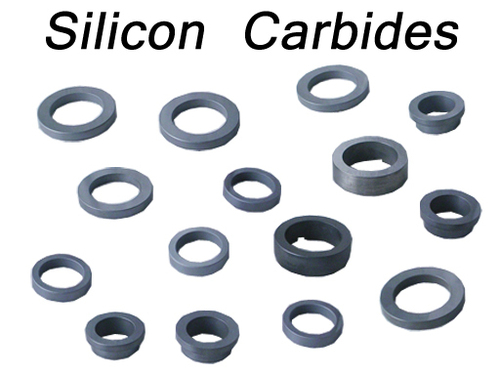
Tell us about your requirement

Price:
Quantity
Select Unit
- 50
- 100
- 200
- 250
- 500
- 1000+
Additional detail
Mobile number
Email

More Products in Sealing Material Category
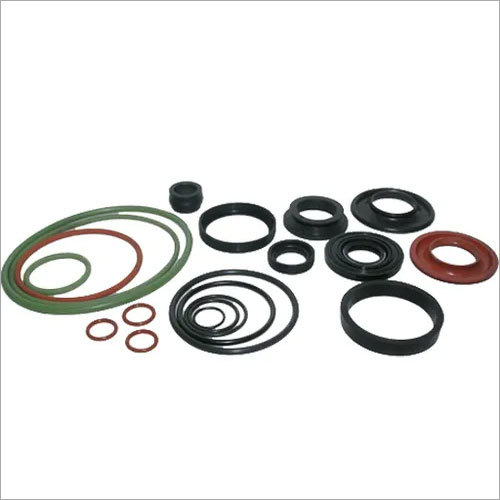
Rubber Seals
Minimum Order Quantity : 50 Inches
Natural Rubber : Yes
Surface Finish : Smooth or textured
Thickness : 26 Millimeter (mm)
Components : Single or multicomponent rubber compounds
Color : Black
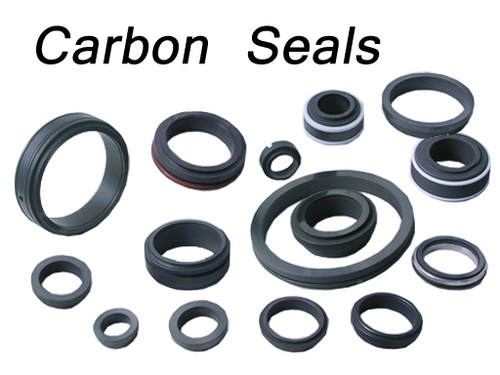
Carbon Seals
Minimum Order Quantity : 50 Inches
Natural Rubber : Yes
Surface Finish : Fine ground
Thickness : 3 to 30 mm
Components : Solid or resinimpregnated carbon
Color : Black
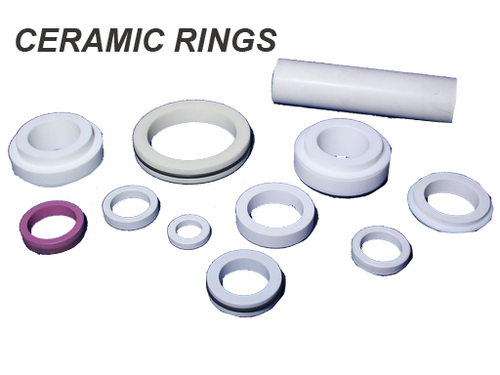
Ceramic Rings
Minimum Order Quantity : 50 Inches
Natural Rubber : Yes
Surface Finish : Porous, rough
Thickness : 1.5 mm to 3 mm
Components : Ceramic
Color : White
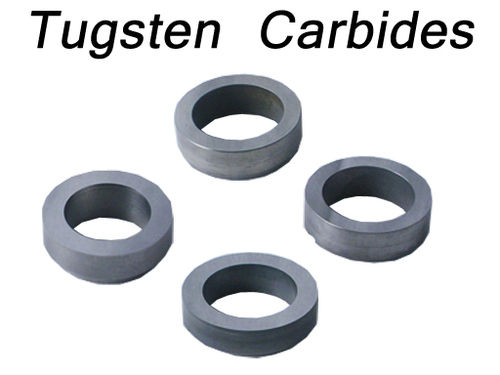
Tungsten Carbide Seal Ring
Minimum Order Quantity : 50 Inches
Natural Rubber : Yes
Surface Finish : Polished
Thickness : 3 mm 15 mm
Components : OnePiece
Color : Grey

 Send Inquiry
Our Products


D/1, Chinaibag Industrial Estate, Opp. Dudheshwar, Ahmedabad - 380004, Gujarat, India

Mr Maksood B Desai
(Partner)
Mobile :07971459289
 Send Inquiry
 Send SMS
Developed and Managed by Infocom Network Private Limited.


 English
 Spanish
 French
 German
 Italian
 Chinese (Simplified)
 Japanese
 Korean
 Arabic
 Portuguese