
Call us now :07971459289
 Send Inquiry
 Send Inquiry
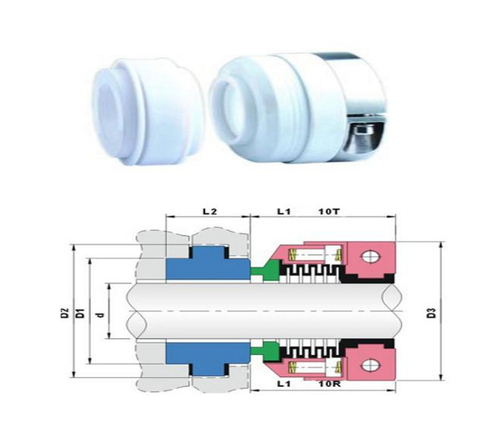
PTFE Oil Seal
PTFE Oil Seal Specification
- Application
- Strong corrosive fluids
- Material
- PTFE
- Temperature
- -40oC to +250oC Celsius (oC)
- Pressure
- 1.2MPa mpa
- Speed
- 15m/s m/s
PTFE Oil Seal Trade Information
- Payment Terms
- Cash in Advance (CID), Cheque, Cash Advance (CA)
- Delivery Time
- Week
- Main Export Market(s)
- Middle East, Asia, Africa
- Main Domestic Market
- All India
About PTFE Oil Seal
With a vision to be a pioneer in our domain, we are emerging as one of the leading manufacturers and suppliers of PTFE Oil Seal. It is built to provide satisfying results even in high pressure conditions. Its innovative designing includes preset springs and double cartridge seal to prevent the product from clogging. The modular structure of this seal allows easy installation. PTFE Oil Seal does not create harmonic seals by minimizing the vibrations during operation. We make available this seal for clients in different specifications as per their requirements.
Operations Conditions:
- Temperature: -40°C to +250°C
- Pressure:=1.2MPa
- Speed:=15m/s
Materials:
- Stationary Ring: Silicon Carbide Reaction Bonded, Ceramic(Alumina),Silicon Carbide
- Sintered Pressureless Rotary Ring: Antimony Impreg. Carbon Graphite, Resin Impregnated
- Carbon Graphite(Furan),Silicon Carbide Reaction Bonded, Silicon Carbide Sintered
- Pressureless
- Secondary Seal: Pure PTFE
- Spring and Metal Parts: Stainless Steel, Stainless Steel, Hastelloy C-4 Alloy
Applications:
Strong corrosive fluids
Product details
| Pressure | 1.2Mpa |
| Brand | Makseals |
| Shape | Round |
| Speed | 15m/s |
| Temperature | -40 Degree C to +250 Degree C |

Superior Resistance for Challenging Applications
Fabricated from pure PTFE, this oil seal offers unparalleled resistance to aggressive chemicals and solvents. It ensures reliable sealing even with exposure to highly corrosive fluids, extending operational life and minimizing maintenance needs in hazardous industrial environments.
Operating Range and Versatile Performance
With a capacity to function at pressures up to 1.2 MPa and speeds of 15 m/s, the PTFE Oil Seal is ideal for high-stress setups. Its wide operational temperature window, from -40C to +250C, makes it suitable for both cryogenic and high-temperature conditions. These features enable broad applicability in diverse industries.
FAQ's of PTFE Oil Seal:
Q: How does the PTFE Oil Seal perform when exposed to strong corrosive fluids?
A: The PTFE Oil Seal is engineered from robust PTFE material, providing outstanding resistance to a wide range of aggressive chemicals and corrosive fluids. This makes it ideal for use in environments where ordinary seals would degrade quickly.Q: What is the recommended process for installing PTFE Oil Seals?
A: Installation should be conducted on clean, dry shaft and housing surfaces. Carefully align the seal and press it in evenly, avoiding any wrinkles or overtightening. Proper installation ensures optimal performance and longevity.Q: When should PTFE Oil Seals be chosen over conventional rubber seals?
A: PTFE Oil Seals are recommended when equipment is exposed to high temperatures, strong corrosive environments, or requires high-speed operation. They outperform rubber seals under these challenging conditions due to their superior chemical and thermal resistance.Q: Where are PTFE Oil Seals commonly used?
A: These seals are widely applied in chemical processing industries, pharmaceuticals, food production, and any setting involving machinery that handles aggressive or corrosive fluids. They are also popular in applications requiring high-speed or high-pressure operation.Q: What are the main benefits of using a PTFE Oil Seal?
A: PTFE Oil Seals deliver long service life, reduced maintenance, and enhanced safety by preventing fluid leakage in harsh environments. Their resistance to corrosion, heat, and pressure result in improved reliability and reduced downtime for equipment.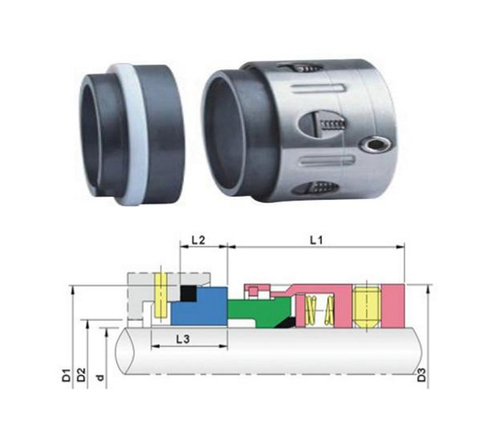
Tell us about your requirement

Price:
Quantity
Select Unit
- 50
- 100
- 200
- 250
- 500
- 1000+
Additional detail
Mobile number
Email

More Products in PTFE Seals Category
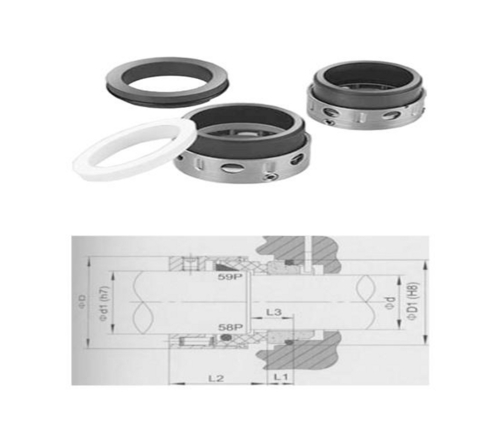
PTFE Industrial Seal
Minimum Order Quantity : 1 Piece
Temperature : 40250 Celsius (oC)
Material : PTFE
Pressure : Up to 20 MPa
Speed : Up to 15 m/s
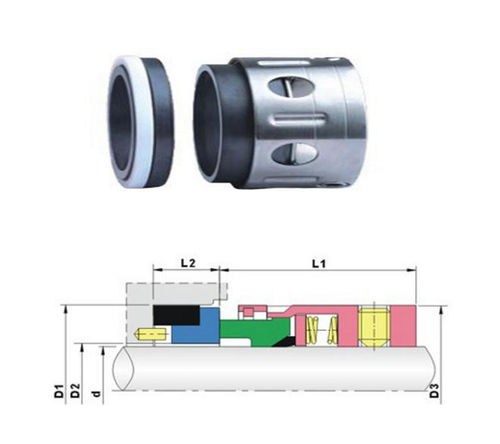
PTFE Mechanical Seal
Minimum Order Quantity : 1 Piece
Temperature : 40250 Celsius (oC)
Material : PTFE
Pressure : Up to 10 bar
Speed : Up to 20 m/s
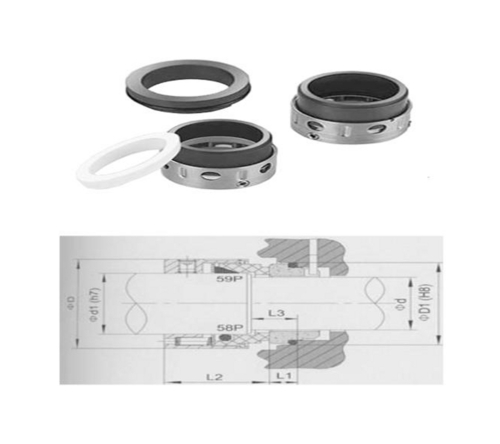
PTFE Fluid Seal
Price 1000 INR / Set
Minimum Order Quantity : 1 Set
Temperature : 40oC~250oC Celsius (oC)
Material : PTFE
Pressure : 2.5Mpa mpa
Speed : 20 m/Sec m/s

 Send Inquiry
Our Products


D/1, Chinaibag Industrial Estate, Opp. Dudheshwar, Ahmedabad - 380004, Gujarat, India

Mr Maksood B Desai
(Partner)
Mobile :07971459289
 Send Inquiry
 Send SMS
Developed and Managed by Infocom Network Private Limited.


 English
 Spanish
 French
 German
 Italian
 Chinese (Simplified)
 Japanese
 Korean
 Arabic
 Portuguese