
Call us now :07971459289
 Send Inquiry
 Send Inquiry
PTFE & Carbon Filled Rings
MOQ : 12 Pieces
PTFE & Carbon Filled Rings Specification
- Usage
- Industrial
- Material
- PTFE & Carbon
- Shape
- O Shaped
- Product Type
- PTFE & Carbon Filled Rings
- Color
- Black
- Density
- 1.8-2.3 Gram per cubic centimeter(g/cm3)
PTFE & Carbon Filled Rings Trade Information
- Minimum Order Quantity
- 12 Pieces
- Supply Ability
- 5000 Pieces Per Week
- Delivery Time
- 15 Days
- Main Domestic Market
- All India
About PTFE & Carbon Filled Rings
Carbon having good sliding properties and an excellent chemical stability is specially used for manufacturing sealing rings, bearings & other carbon products, also carbon impregnated with resin of metals gives better results in specific application: Some of the mechanical &physical properties are *Self lubrication *High thermal resistance *High corrosion resistance *Resistance to thermal shocks *Minimum thermal expansion *Better thermal conductivity *Less deformation on extreme temperatures.
Applications : Chemical pumps, Water pumps , Agitators & Autoclave
Filed : Refineries *Textiles *Chemical plants *Petro chemical *Industries *Nuclear plants * Food processing.
Product details
|
Bulk Density |
1.8-2.3g/cm3 |
|
Shape |
O Shaped |
|
Material |
PTFE and Carbon |
|
Packaging Type |
Box |
|
Flexural Strength |
30-60Mpa |
|
Compressive Strength |
60-180Mpa |
Exceptional Material Advantages
Combining PTFE's inherent chemical inertness with carbon's toughening properties, these O-shaped rings offer remarkable resistance to corrosion, high temperatures, and mechanical wear. The unique composition extends their service life in demanding industrial processes, making them a highly reliable choice for multiple sectors.
Versatile Industrial Applications
Thanks to their robust physical and chemical properties, PTFE & Carbon Filled Rings find use in pump seals, valve seats, gaskets, and bearing components. Their effectiveness in aggressive environments enhances machinery lifespan and ensures consistent operation under varied pressures and temperatures.
FAQ's of PTFE & Carbon Filled Rings:
Q: How are PTFE & Carbon Filled Rings manufactured?
A: The rings are produced by mixing PTFE with carbon powder and then molding or extruding the material into O-shaped profiles. After forming, the rings are sintered at high temperatures to achieve optimal density and desired mechanical traits.Q: What industrial applications benefit from using these O-shaped rings?
A: Industries such as chemical processing, petrochemical, power generation, and automotive depend on these rings for sealing and insulating equipment exposed to corrosive fluids and elevated temperatures.Q: When should I choose PTFE & Carbon Filled Rings over standard PTFE rings?
A: Opt for PTFE & Carbon Filled Rings when enhanced wear resistance, conductivity, and improved strength are required alongside PTFE's signature low coefficient of friction and non-reactivity.Q: Where can these rings be sourced in India?
A: These rings are readily available through specialized exporters, manufacturers, and suppliers across India, with options for customized sizes and bulk supply to meet specific project needs.Q: What is the typical density range of these rings, and why is it important?
A: The density typically ranges from 1.8 to 2.3 g/cm3, ensuring a balance between lightweight characteristics and increased mechanical strength, critical for enduring harsh industrial operating conditions.Q: Can you explain the process for importing or exporting these rings from India?
A: To import or export PTFE & Carbon Filled Rings from India, businesses must comply with export guidelines, quality standards, and logistics requirements. Trusted suppliers assist with documentation, quality certification, and global shipping.Q: What are the major benefits of using PTFE & Carbon Filled Rings in industrial machinery?
A: The primary benefits include excellent chemical resistance, minimized friction, augmented wear performance, and high durability, all of which contribute to reduced maintenance and extended equipment life cycles.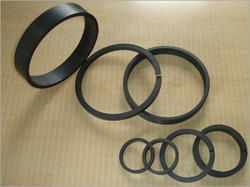
Tell us about your requirement

Price:
Quantity
Select Unit
- 50
- 100
- 200
- 250
- 500
- 1000+
Additional detail
Mobile number
Email

More Products in Mechanical Carbon products Category
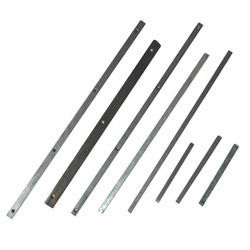
Carbon Rails
Minimum Order Quantity : 1 Square Meter
Product Type : Carbon Rails
Material : Carbon
Usage : Industrial
Color : Grey
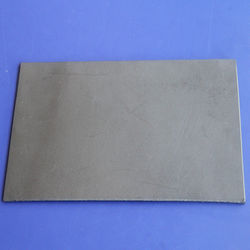
PTFE & Carbon Filled Sheets
Price 2000 INR / Sheet
Minimum Order Quantity : 20 Sheets
Product Type : PTFE & Carbon Filled Sheets
Material : PTFE & Carbon
Usage : Industrial
Color : Grey
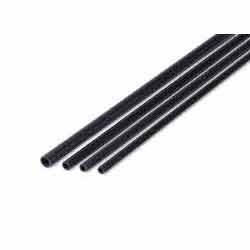
Carbon Tubes
Minimum Order Quantity : 1 Foot
Product Type : Carbon Tubes
Material : Carbon
Usage : Industrial
Color : Black
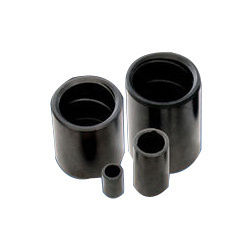
Carbon Radial Bearing Bushes with Grooves
Price 2000 INR / Piece
Minimum Order Quantity : 1 Piece
Product Type : Carbon Radial Bearing Bushes
Material : Carbon Steel
Usage : Industrial
Color : Black

 Send Inquiry
Our Products


D/1, Chinaibag Industrial Estate, Opp. Dudheshwar, Ahmedabad - 380004, Gujarat, India

Mr Maksood B Desai
(Partner)
Mobile :07971459289
 Send Inquiry
 Send SMS
 Call Me Free
Developed and Managed by Infocom Network Private Limited.


 English
 Spanish
 French
 German
 Italian
 Chinese (Simplified)
 Japanese
 Korean
 Arabic
 Portuguese