
Call us now :07971459289
 Send Inquiry
 Send Inquiry
Piston Packing & Turbine Rings
MOQ : 1 Pack
Piston Packing & Turbine Rings Specification
- Usage
- Sealing water turbine shafts
- Material
- Carbon
- Application
- Reciprocating and rotary piston compressors, turbines, steam engines, vacuum pumps, and other industrial sealing applications
- Chemical Composition
- Depending on material: C (Carbon) 99% min., PTFE (Polytetrafluoroethylene), Bronze (Cu-Sn alloy), Cast Iron (Fe-based alloy with C and Si)
- Shape
- Round
- Product Type
- Piston Packing & Turbine Rings
- Hardness
- 60-90 Shore D (for PTFE/Composite), 30-50 HRC (for metallic variants)
- Color
- Black
- Density
- 8.0 Gram per cubic centimeter(g/cm3)
- Color
- Black, brown, metallic grey, or as per material selected
- Pressure Capacity
- Up to 200 bar depending on application and material grade
- Wear Resistance
- Excellent due to self-lubricating or hard-wearing alloys
- Coefficient of Friction
- Low, typically 0.05 - 0.20 depending on the composition
- Standard Sizes
- From 25 mm to 1000 mm diameter or customized
- Finish
- Precision machined for smooth sealing surface
- Operating Temperature Range
- -40C to +250C (varies with material type)
Piston Packing & Turbine Rings Trade Information
- Minimum Order Quantity
- 1 Pack
- Supply Ability
- 1000 Packs Per Week
- Delivery Time
- 15 Days
About Piston Packing & Turbine Rings
Our professional organization is a successful manufacturer, supplier and exporter of Piston Packing & Turbine Rings to its contemporary clients. Top-of-the-line grade carbon sheet and latest machinery are used in order to create the whole spectrum of the rings that ensure their dimensional accuracy, durability, high thermal shock resistance, self lubrication and high temperature resistance. These Piston Packing & Turbine Rings are utilized for sealing turbine shafts and find its application in diverse industries like hydro & thermal power stations, chemical plants, fertilizers, refineries and nuclear engineering etc.
Product details
|
Density |
1.5-2.4g/cm3 |
|
Material |
Carbon |
|
Packaging Type |
Box |
|
Shape |
Round |
|
Usage/Application |
Sealing water turbine shafts |
Precision Engineering for Reliable Sealing
Our piston packing and turbine rings undergo precision machining to ensure a flawless, smooth sealing surface. This level of engineering guarantees optimal fit and performance, minimizing leakage and wear in both reciprocating and rotary equipment. Every ring is manufactured to stringent quality standards, enabling use in high-stress industrial settings.
Versatile Application Across Industries
Engineered to excel in a variety of environments, these rings are ideal for water turbine shafts, piston compressors, steam engines, and vacuum pumps. The selection of materials-from self-lubricating carbon to hard-wearing alloys-allows customization based on temperature, pressure, and chemical exposure, supporting specialized operational needs.
High Performance Through Material Innovation
Our products utilize cutting-edge materials, including high-purity carbon, PTFE composites, bronze alloys, and cast iron variants. This broad material palette offers exceptional wear resistance, low friction, and tailored hardness, ensuring extended service life and minimal maintenance requirements in demanding industrial applications.
FAQ's of Piston Packing & Turbine Rings:
Q: How are piston packing and turbine rings used in industrial applications?
A: These rings act as critical sealing components in a range of machinery, including reciprocating and rotary piston compressors, turbines, steam engines, and vacuum pumps. They prevent fluid leakage and maintain system pressure, thereby enhancing operational reliability and efficiency.Q: What determines the optimal material choice for these rings?
A: Material selection depends on the application's temperature, pressure, and chemical exposure. High-purity carbon is preferred for self-lubrication and wear resistance, PTFE for low friction, bronze for additional strength, and cast iron for compatibility in harsh, high-temperature environments.Q: When should piston packing and turbine rings be replaced?
A: Replacement is necessary if you observe increased leakage, decreased performance, or abnormal wear. Adhering to a regular maintenance schedule based on operating frequency and conditions helps prevent unscheduled downtime and equipment failure.Q: Where can these rings be custom-manufactured for specific requirements?
A: We offer both standard and customized production in India, serving clients as exporters, importers, manufacturers, and suppliers. Custom dimensions and material compositions can be tailored for unique sealing challenges.Q: What is the manufacturing process for these rings?
A: Rings are precision-machined from carbon, PTFE, bronze, or cast iron materials, ensuring smooth surface finishes and exact tolerances. Depending on the material, specific processes such as powder metallurgy, sintering, or CNC machining may be utilized to achieve desired properties.Q: How does the low coefficient of friction benefit system performance?
A: A low coefficient of friction (typically 0.05-0.20) reduces energy loss, limits heat generation, and prolongs the life of both the sealing ring and the mating surfaces. This contributes to efficient operation and a longer maintenance cycle.Q: What are the main benefits of using these piston packing and turbine rings?
A: Key advantages include excellent wear resistance, adaptability to high pressure and temperature ranges, low maintenance needs due to self-lubricating properties, and compatibility with various media and machine types, making them a versatile solution for industrial sealing applications.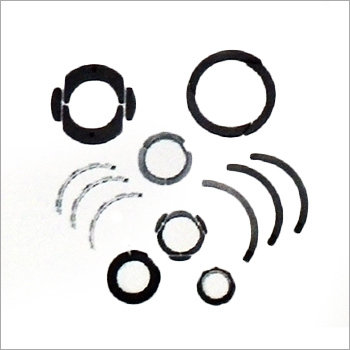
Tell us about your requirement

Price:
Quantity
Select Unit
- 50
- 100
- 200
- 250
- 500
- 1000+
Additional detail
Mobile number
Email

More Products in Graphite Products Category
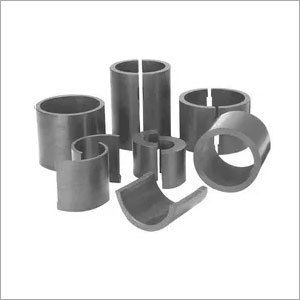
PTFE & Graphite Filled Bushes
Minimum Order Quantity : 1 Piece
Material : Graphite
Density : 2.30 Gram per cubic centimeter(g/cm3)
Usage : Industrial
Product Type : PTFE & Graphite Filled Bushes
Color : Grey
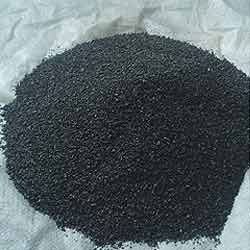
Graphite Granules
Minimum Order Quantity : 1 Pack
Material : Graphite
Density : 1.95 Gram per cubic centimeter(g/cm3)
Usage : Industrial
Product Type : Graphite Granules
Color : Black
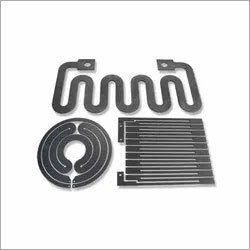
Graphite Heating Elements
Minimum Order Quantity : 1 Piece
Material : Graphite
Density : 1.751.93 Gram per cubic centimeter(g/cm3)
Usage : Heater
Product Type : Graphite Heating Elements
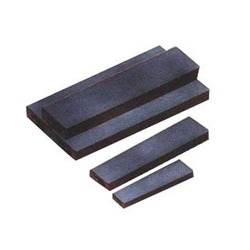
Graphite Plates
Minimum Order Quantity : 1 Sheet
Material : Graphite
Density : 1.81.85 Gram per cubic centimeter(g/cm3)
Usage : Industrial
Product Type : Graphite Plates
Color : Grey

 Send Inquiry
Our Products


D/1, Chinaibag Industrial Estate, Opp. Dudheshwar, Ahmedabad - 380004, Gujarat, India

Mr Maksood B Desai
(Partner)
Mobile :07971459289
 Send Inquiry
 Send SMS
Developed and Managed by Infocom Network Private Limited.


 English
 Spanish
 French
 German
 Italian
 Chinese (Simplified)
 Japanese
 Korean
 Arabic
 Portuguese