
Call us now :07971459289
 Send Inquiry
 Send Inquiry
Mechanical Shaft Seals
MOQ : 1 Piece
Mechanical Shaft Seals Specification
- Theory
- Mechanical Contact Seal
- Application
- Pumps, Compressors, Agitators, Mixers, Blowers
- Hardness
- 70-85 Shore A (elastomer parts)
- Usage
- Industrial
- Style
- Mechanical Seal
- Material
- PTFE
- Temperature
- -20C to 180C
- Pressure
- Up to 25 bar
- Product Type
- Mechanical Shaft Seals
- Speed
- Up to 20 m/s
- Function
- Sealing rotating shafts against leakage of fluids
- Color
- Sliver
- Size
- 12 mm to 100 mm shaft diameter
- Structure
- Single Spring, Multi-spring, Conical Spring, Metal Bellows
- Surface Finish
- 0.2-0.8 m Ra (Sliding Face)
- Face Combination
- Carbon vs Ceramic, SiC vs SiC
- Rotational Direction
- Bi-directional and Uni-directional
- Seal Type
- Single, Double, Tandem
- Mounting
- Cartridge and Component Type
- Shaft Tolerance
- h6 or as specified
- Spring Material
- Stainless Steel (SS304/SS316)
- O-Ring Material
- NBR, Viton, EPDM
- Leakage Rate
- 0.5 ml/h (API 682)
About Mechanical Shaft Seals
Mechanical Shaft Seals
Keeping in mind the precise demands of our clients, we offer a wide range of Mechanical Shaft Seals. These are available with us in various sizes, thickness and dimensions as per the precise demands of our clients. Further, in order to ensure quality and avoid any kind of flaw, these seals are tested against various quality parameters. Our products are acclaimed for their anti corrosive nature and high functional efficiency.
Features:
- Made of international standard
- Replacement against any make of shaft seals
- Longer life & minimum maintenance
- Perfect sealing
- Precision lapped surface
- Seal face carbon, tungsten carbides, silicon carbides, high alumina ceramic, S.S 316L, 304 and PTFE field
Mechanical seals are used in:
- Water pump seals
- Chemical pump seals
- Seals for agitator
- Centrifugal pump seals
- Compressors seals
- Rotary pump seals
- Textile dyeing seals
- Textile machinery's seals
- Fuel oil pumps seals for boiler
- Solvent pumps seals
- Automobiles pumps seals
- Milk pumps seals
- Oil processing & refining plant seals
- Reaction vessels seals
Product details
|
Rotary Ring |
Ceramic, Silicon Carbide |
|
Pressure |
1.0-2.0 MPa |
|
Shape |
Round |
|
Stationary Ring |
Carbon, Silicon Carbide |
|
Spring and Metal Parts |
Stainless Steel |
|
Speed |
10-15 m/s |
|
Secondary Seal |
NBR, EPDM, Viton |
Reliable Sealing Solutions for Industrial Applications
Engineered for reliability, our mechanical shaft seals serve a wide range of industries and equipment, including pumps, compressors, mixers, and agitators. With configurations suitable for both single and double seals, and adaptable structures ranging from single spring to metal bellows, you gain robust protection against fluid leakage even under demanding operating conditions.
Material Options Match Performance Needs
Choose from a variety of face combinations, including durable SiC vs SiC and carbon vs ceramic, with O-rings in NBR, Viton, or EPDM to suit various chemical and temperature demands. The use of high-grade stainless steel for springs and PTFE components ensures both mechanical strength and chemical compatibility, while a precise surface finish enhances long-term performance.
Designed for User Convenience and Versatility
Offered in both cartridge and component types, these seals streamline installation and maintenance. With standardized shaft tolerance and hardness levels in elastomer parts, you can easily integrate them into existing equipment or specify for new projects. A comprehensive size range covers shaft diameters from 12 mm to 100 mm, ensuring coverage for diverse application requirements.
FAQ's of Mechanical Shaft Seals:
Q: How do mechanical shaft seals prevent fluid leakage in rotating equipment?
A: Mechanical shaft seals work by maintaining a tight seal between a stationary and a rotating surface, typically using precisely matched face materials like carbon vs ceramic or SiC vs SiC. The spring mechanism and elastomeric O-rings ensure continuous contact and adaptability to shaft movement, effectively sealing fluids under varying pressures and speeds.Q: What is the difference between cartridge and component type mechanical seals?
A: Cartridge seals come pre-assembled in a housing for straightforward installation and alignment, minimizing installation errors and downtime. Component seals consist of separate elements that need to be assembled directly on the equipment shaft, offering flexibility for customized applications and replacement parts.Q: When should I choose a single, double, or tandem seal configuration?
A: Single seals are ideal for applications involving non-hazardous liquids and lower pressures. Double seals provide extra protection in handling toxic or abrasive fluids, while tandem seals are designed for high-reliability scenarios where leakage must be strictly controlled, such as in chemical processing or hazardous environments.Q: Where are these shaft seals commonly used in industry?
A: These mechanical shaft seals are widely utilized in pumps, compressors, agitators, mixers, and blowers across industries such as water treatment, chemical processing, petrochemicals, and general manufacturing, wherever rotating shafts require effective containment of process fluids.Q: What is the typical leakage rate for these mechanical seals, and why is it important?
A: According to API 682 standards, the typical leakage rate is up to 0.5 ml/h. Maintaining this low leakage rate is crucial for environmental compliance, fluid containment, and reliable operation of process equipment, minimizing both product loss and potential risks to personnel or equipment.Q: How do I select the appropriate O-ring and face material for my application?
A: Selection depends on the fluid being handled, operating temperature, and chemical compatibility. NBR is suitable for oils and water at moderate temperatures, Viton for higher temperatures and aggressive chemicals, and EPDM for polar solvents. For face combinations, carbon vs ceramic is suited for general-purpose use, while SiC vs SiC provides abrasion resistance for harsher environments.Q: What are the benefits of the 0.2-0.8 m Ra sliding face finish in these seals?
A: A finely polished surface finish ensures minimal friction and optimal sealing capability between the rotating and stationary faces. This reduces wear, prolongs seal life, and consistently maintains the low leakage rates required for high-performance industrial operations.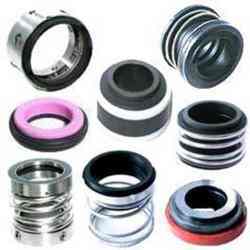
Tell us about your requirement

Price:
Quantity
Select Unit
- 50
- 100
- 200
- 250
- 500
- 1000+
Additional detail
Mobile number
Email

More Products in Mechanical Seals Category
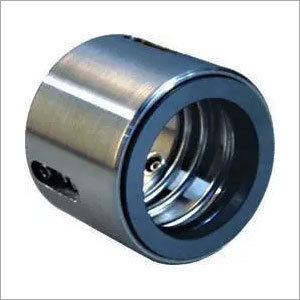
Mechanical Seals for Textile Machineries
Price 1000 INR / Set
Minimum Order Quantity : 1 Set
Product Type : Mechanical Seals
Color : Sliver
Style : Other, Single Acting, Balanced or Unbalanced
Material : Other, SS
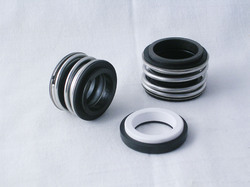
Water Pump Seals
Price 50 INR / Set
Minimum Order Quantity : 1 , , Set
Product Type : Water Pump Seals
Color : Black
Style : Other, Rotary Mechanical Seal
Material : Other, SS
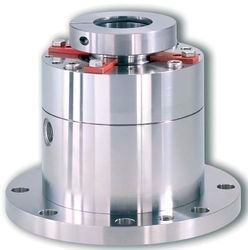
Mechanical Seals for Agitators
Price 10000 INR / Set
Minimum Order Quantity : 1 Set
Product Type : Mechanical Seals for Agitators
Color : Sliver
Style : Mechanical Seal
Material : PTFE
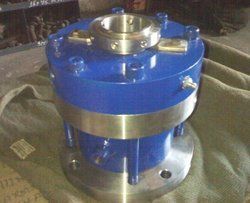
Mechanical Seals for Reaction Vessels
Minimum Order Quantity : 1 Set
Product Type : Reaction Vessels
Color : Sliver
Style : Mechanical Seal
Material : Other, SS

 Send Inquiry
Our Products


D/1, Chinaibag Industrial Estate, Opp. Dudheshwar, Ahmedabad - 380004, Gujarat, India

Mr Maksood B Desai
(Partner)
Mobile :07971459289
 Send Inquiry
 Send SMS
 Call Me Free
Developed and Managed by Infocom Network Private Limited.


 English
 Spanish
 French
 German
 Italian
 Chinese (Simplified)
 Japanese
 Korean
 Arabic
 Portuguese