
Call us now :07971459289
 Send Inquiry
 Send Inquiry
Elastomer Seals
MOQ : 1 Piece
Elastomer Seals Specification
- Application
- Hydraulic cylinders, pneumatic systems, industrial machinery
- Theory
- Dynamic or static sealing
- Hardness
- 70-90 Shore A
- Usage
- Industrial
- Style
- Standard, custom options available
- Material
- Elastomer
- Temperature
- -20oC~200oC Celsius (oC)
- Pressure
- 0.6Mpa mpa
- Product Type
- Elastomer Seals
- Speed
- 10 m/Sec m/s
- Function
- Sealing and preventing fluid leakage
- Size
- Standard and custom sizes
- Structure
- Single or composite seal structure
- Compression Set
- Low, suitable for dynamic applications
- Tensile Strength
- 11 MPa
- Resistance
- Good resistance to oils, greases, and chemicals
- Elongation at Break
- 300%
- Manufacturing Standard
- Complies with ISO 3601
- Installation
- Easy to install and replace
- Surface Finish
- Smooth, precision-molded
- Color
- Black or as per requirement
Elastomer Seals Trade Information
- Minimum Order Quantity
- 1 Piece
- Payment Terms
- Cash in Advance (CID), Cheque, Cash Advance (CA)
- Supply Ability
- 50 Pieces Per Day
- Delivery Time
- Week
- Main Export Market(s)
- Africa, Middle East, Asia
- Main Domestic Market
- All India
About Elastomer Seals
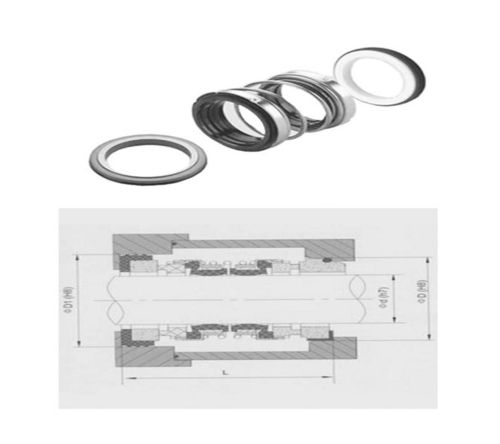
We are glad to present ourselves as one of the leading manufacturers and suppliers of Elastomer Seals. They are built to provide a continuous double shaft seal to the aggressive, toxic and explosive liquids. We use best quality materials, sourced from trusted vendors to manufacture these seals. These have pressurized back to back double seal arrangement which prevents leakage of liquid effectively. Elastomer Seals are used in paint industry, petrochemical industry and distilling plants. We offer these seals at market leading prices to clients.
Elastomer Bellow Mechanical Seal
Combined Materials:
- Stationary Ring (Ceramic/SiC/TC)
- Rotary Ring (Carbon/SiC/TC)
- Secondary Seal (NBR/EPDM/Viton)
- Spring and Punched Parts (Steel)
Working Conditions:
- Mediums: Water, oil and weakly-corrosive mediums.
- Temperature: -20 C to +200C
- Pressure: =0.6Mpa
- Speed: = 10 m/Sec
Product Details
|
Application |
Water and Oil |
|
Pressure |
0.6Mpa |
|
Speed |
10 m/sec |
|
Temperature |
-20 Degree C to 200 Degree C |
|
Steel Grade |
SS316 |

Reliable Sealing for Demanding Environments
Our elastomer seals are designed to excel in dynamic and static industrial applications, providing robust sealing for hydraulic and pneumatic systems. Their high tensile strength, low compression set, and excellent chemical resistance make them the optimal choice for demanding environments where leak prevention is critical.
Customizable Options for Precise Applications
We offer standard and customized elastomer seals, tailored to meet your specific operational requirements. With options in hardness, size, and color, our seals can be engineered to suit unique machinery, ensuring compatibility and maximum efficiency for every installation.
Easy Maintenance and Installation
Featuring a precision-molded, smooth surface finish, our seals are designed for quick and trouble-free installation and replacement. This allows for minimal equipment downtime and reduces maintenance costs, supporting uninterrupted operation in busy industrial environments.
FAQ's of Elastomer Seals:
Q: How are elastomer seals installed and replaced in industrial machinery?
A: Elastomer seals are designed for straightforward installation and replacement. Their precision-molded, smooth finish allows them to be easily fitted into grooves or sealing surfaces. Installation typically involves slight lubrication and pressing into position, making the process simple and reducing overall maintenance time.Q: What are the main benefits of using elastomer seals in hydraulic and pneumatic systems?
A: The primary benefits include excellent oil, grease, and chemical resistance, high tensile strength (11 MPa), and outstanding elongation (300%). These features ensure reliable sealing, optimal performance in dynamic applications, and extended service life in both hydraulic and pneumatic systems.Q: When should elastomer seals be considered for use in industrial equipment?
A: Elastomer seals are ideal when machinery operates under varying temperatures (-20C to 200C), moderate pressures (up to 0.6 MPa), and high speeds (up to 10 m/s), especially where resistance to oils and chemicals is essential. Their versatility makes them suitable for new equipment installations or replacement during scheduled maintenance.Q: Where can these elastomer seals be applied within industrial settings?
A: They can be used in hydraulic cylinders, pneumatic actuators, pumps, compressors, and a wide range of industrial machinery. Their robust structure and sealing capability prevent fluid leakage in diverse environments, both dynamic and static.Q: What process ensures elastomer seals meet quality standards?
A: Each seal is manufactured to comply with ISO 3601 standards, using precision molding techniques. Quality control includes rigorous testing for tensile strength, elongation at break, compression set, and other criteria to ensure consistent, high-performance products.Q: How does customizing elastomer seals benefit industrial applications?
A: Customizing aspects like size, structure (single or composite), hardness, and color allows seals to precisely fit unique equipment configurations. This enhances compatibility, improves sealing effectiveness, and can address specific operational requirements for various industries.Q: What is the function of elastomer seals in preventing fluid leakage?
A: These seals create a tight barrier between mating surfaces, preventing fluids such as oil or air from escaping. Their elasticity and resistance to deformation ensure a reliable seal even in demanding dynamic applications, maintaining pressure and system efficiency.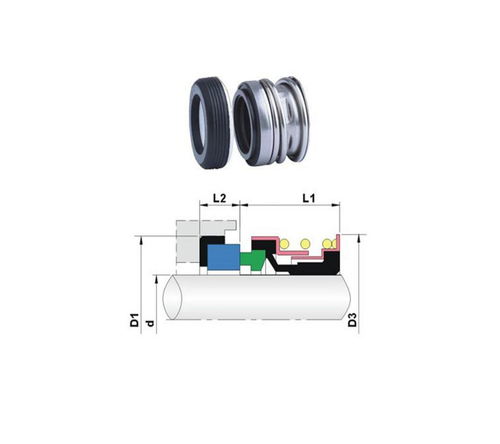
Tell us about your requirement

Price:
Quantity
Select Unit
- 50
- 100
- 200
- 250
- 500
- 1000+
Additional detail
Mobile number
Email

More Products in Elastomer Bellow Seals Category
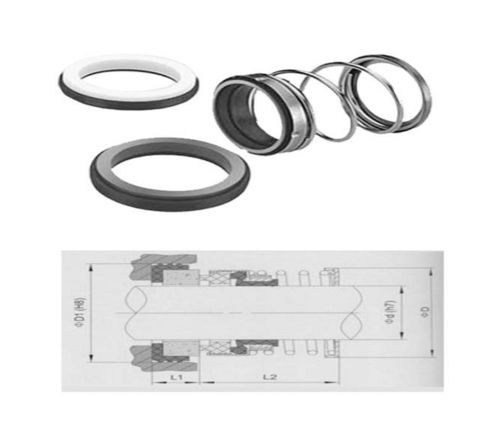
Elastomer Bellow Mechanical Seal
Minimum Order Quantity : 1 Set
Usage : Industrial
Color : Sliver
Temperature : 20C to +180C
Material : Metal
Product Type : Bellow Mechanical Seal
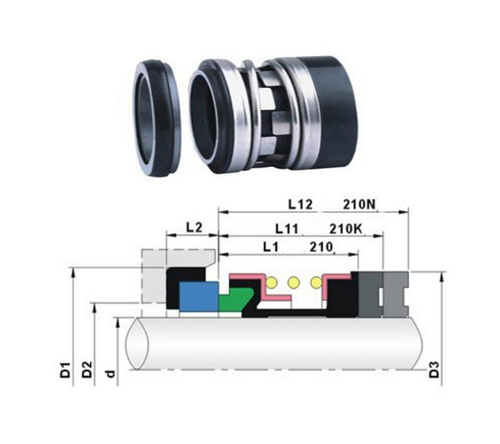
Elastomer Bellow Mechanical Seal
Minimum Order Quantity : 1 Piece
Usage : Industrial
Color : Sliver
Temperature : 20120 Celsius (oC)
Material : Other, SS
Product Type : Elastomer Bellow Mechanical Seal
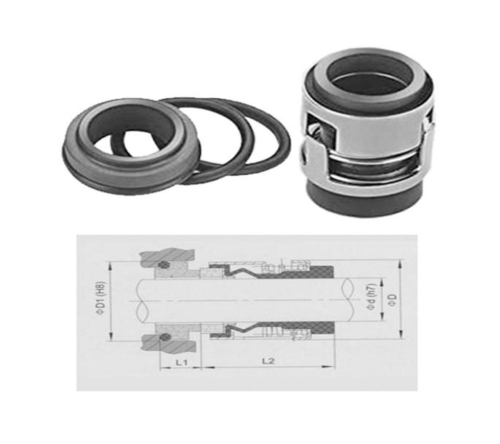
Elastomer Bellow Mechanical Seal
Usage : Industrial
Color : Grey
Temperature : 20150 Celsius (oC)
Material : Other, SS
Product Type : Elastomer Bellow Mechanical Seal
Elastomer Bellow Mechanical Seal
Usage : Industrial
Color : Sliver
Temperature : 20120 Celsius (oC)
Material : Other, Carbon, Ceramic, Stainless Steel, Nitrile (NBR), EPDM, or Viton Rubber
Product Type : Elastomer Bellow Mechanical Seal

 Send Inquiry
Our Products


D/1, Chinaibag Industrial Estate, Opp. Dudheshwar, Ahmedabad - 380004, Gujarat, India

Mr Maksood B Desai
(Partner)
Mobile :07971459289
 Send Inquiry
 Send SMS
Developed and Managed by Infocom Network Private Limited.


 English
 Spanish
 French
 German
 Italian
 Chinese (Simplified)
 Japanese
 Korean
 Arabic
 Portuguese